Pink Oyster - (Pleurotus djamor)


| Edibility & Taste | Pink Oysters are edible and taste “seafoody” while having a slightly chewy but meaty texture and a nutty flavor. They are considered "umami mushrooms” and when cooked to a crispy texture they taste like bacon. |
| Grows On | Agricultural byproducts (cereal straws, dried corn cobs, dried lemongrass, and much more), invasive plants (dried kudzu, water hyacinth), spent coffee grounds, paper, and cardboard. |
| Fruiting Temps | 24-35°C or 75-95°F |
| Availability | Fruiting kits are available for purchase year-round. 5lb bags are available for purchase year-round but should not be grown outdoors September through April in non-tropical or subtropical climates. Slants are available for purchase year-round. |
Fun Fact:
Pink Oyster mushrooms are native to tropical and subtropical regions including Mexico and Indonesia.
HELPFUL LINKS
📘 Learn & Grow
🍄🟫 Shop Essentials
PROFILE

Cap
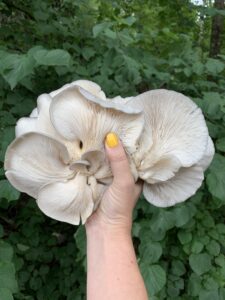
Smooth, pink in color, fan shaped, sometimes wavy

Fertile Surface
Pink gills producing white spores, running from the edge of cap all the way down to stipe

Stipe
Lacking or very short, thick
Fun Fact:
Pink Oyster mushrooms can be cultivated on invasive dried plants like kudzu and water hyacinth
RECIPE

Pink Oyster Mushroom Rice Bowl
Ingredients:
• 1 pound of fresh Pink Oyster mushrooms
• Olive oil
• 1 large onion sliced
• 2 garlic cloves
• Pinion nuts
• Cooked rice
• Green beans
• Salt, pepper, rosemary, thyme
• Soy Sauce
• Mirin
Directions:
1. Sautée mushrooms in a hot skillet with a bit of olive oil to reduce the water content in them. Add sliced onions and sauteé until onions are soft and translucent.
2. Add green beans and minced garlic. Add a splash of soy sauce and mirin, and continue cooking for about 5 minutes. You want to make sure the mushrooms are cooked through all the way so you are able to benefit from them nutritionally.
3. Season with preferred spices.
Serve your mushrooms over a hot bowl of rice. Add some pinion pine nuts and decorate with any edible flower petals.
MYCOREMEDIATION POTENTIAL

- Biosorption of heavy metals
- Biodegradation of gas oil
- Biodegradation of synthetic dyes
- Biodegradation of pesticides and persistent herbicides
- Biodegradation of polycyclic aromatic hydrocarbons (PAHs)
- Biodegradation of ciprofloxacin, an antibiotic that is accumulating in the environment, causing a rise in multiple drug-resistant microbes
- Biodegradation of Green Polyethylene
- Biodegradation of Polychlorinated biphenyls (PCBs)
NUTRITIONAL BENEFITS

Nutritional content of 1 cup (86 grams)
- Calories: 28
- Carbs: 5 grams (38%)
- Protein: 3 grams (27%)
- Fat: <1 gram (1%)
- Fiber: 2 grams
- Niacin: 27% of the Daily Value (DV)
- Pantothenic Acid (Vitamin B5): 22% of the DV
- Folate: 8% of the DV
- Choline: 8% of the DV
- Potassium: 8% of the DV
- Iron: 6% of the DV
- Phosphorus: 8% of the DV
- Zinc: 6% of the DV
MEDICINAL BENEFITS

High in:
- Antioxidants
- Anti-fungal properties
- Lovastatin (for treating bad cholesterol and reducing inflammation associated with pancreatitis)
- Niacin/Vitamin B3 (improves circulation, suppresses inflammation, can help lower risk of Alzheimer’s and other age-related cognitive issues)
- Pleuran (immunomodulating beta-glucan)
- Other B Vitamins (important to brain function and production of energy)
- Fiber (great for digestive health and weight loss)
- Vitamin D (boosts bone mineral density)
- Selenium (benefits DNA production and thyroid hormone metabolism)