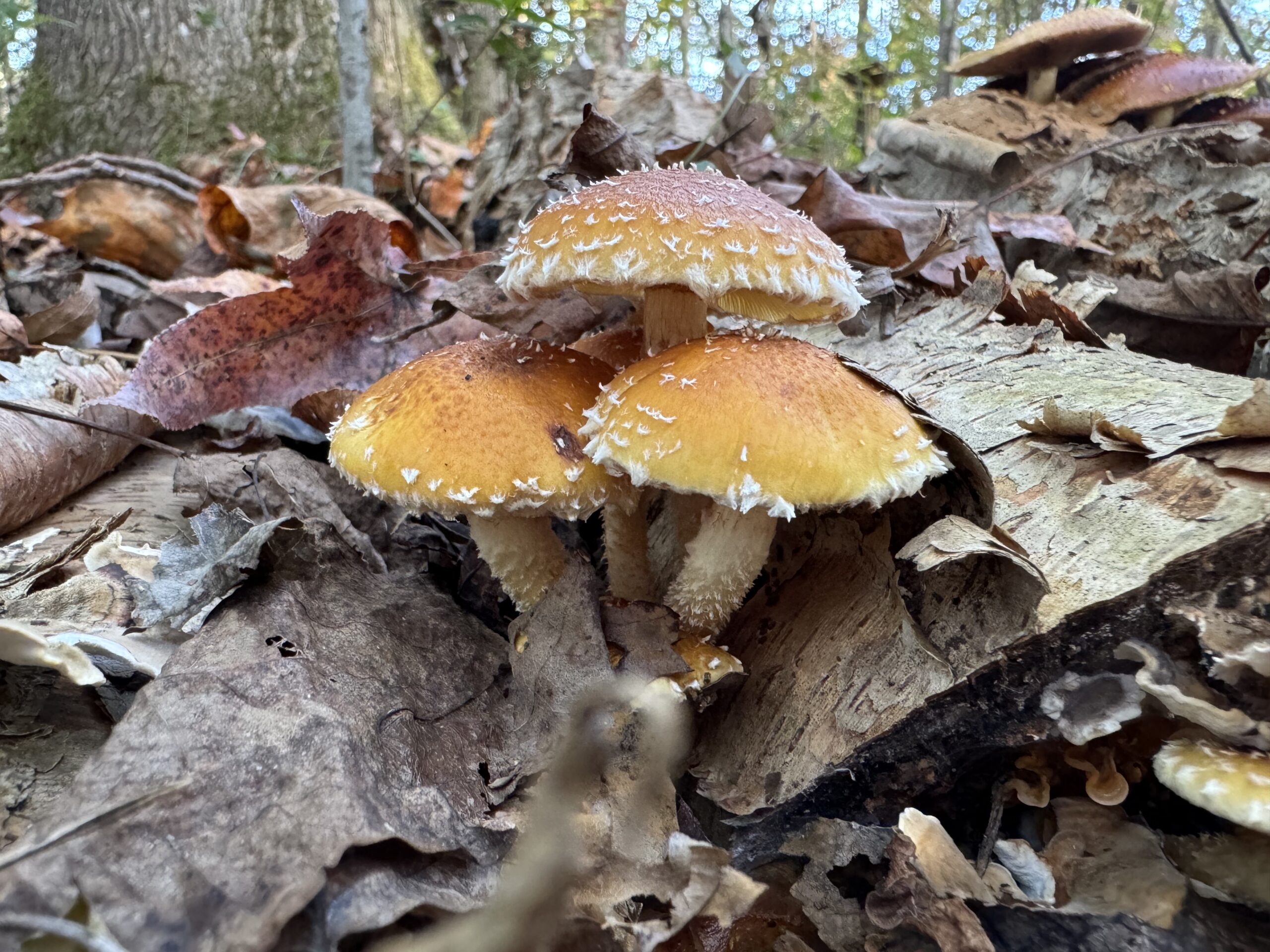
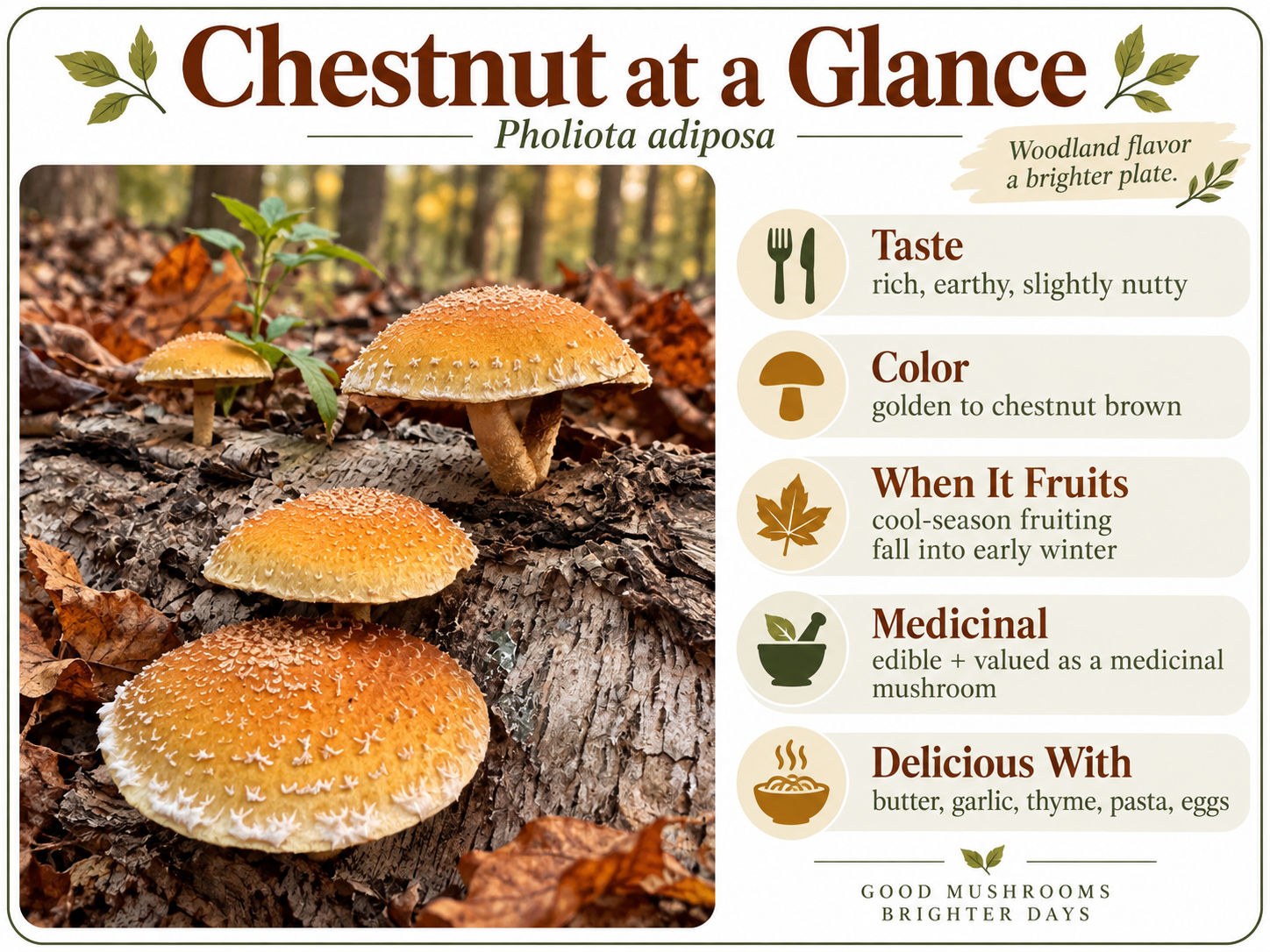
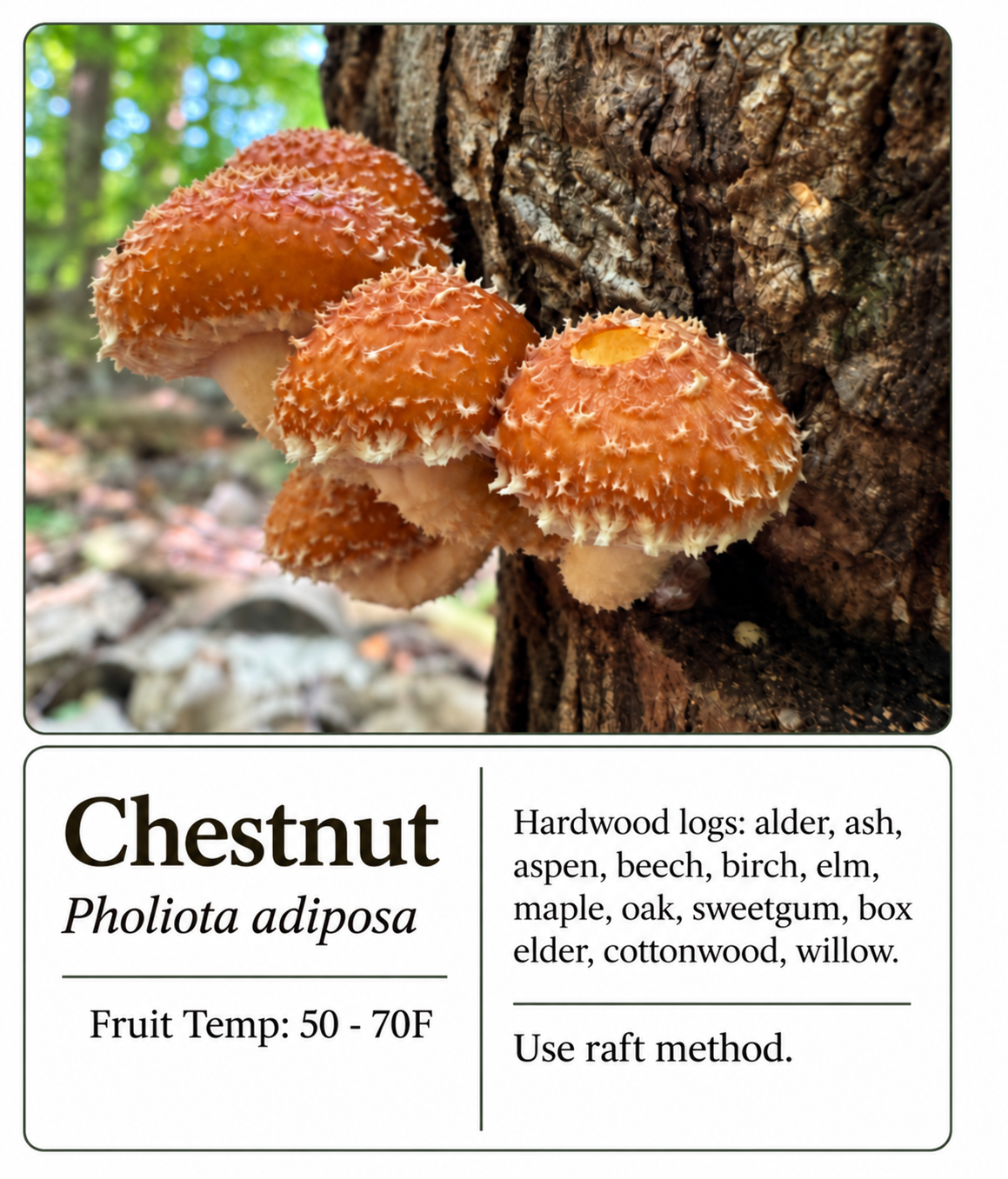
Chestnut mushrooms are one of those mushrooms that catch your eye immediately. They grow in beautiful clusters of golden to chestnut-brown caps, often covered in tiny pale scales, and they have a firm texture with a rich and nutty flavor.
They are also a wonderful mushroom to grow outdoors. One of our favorite methods is the raft method, where inoculated hardwood logs are arranged together in a shady, moist area and allowed to become part of the landscape.
Why Grow Chestnut Mushrooms on Logs?
Chestnut mushrooms are wood decomposers, which means hardwood is exactly what they want. Growing them on logs is slower than growing them indoors on a prepared fruiting block, but the tradeoff is worth it: once established, the logs can produce mushrooms over multiple seasons.
Outdoor log cultivation also requires very little equipment after the initial setup. You are not trying to recreate a controlled fruiting room. Instead, you are giving the fungus fresh wood, shade, moisture and time, then allowing nature to do most of the work.
What Is the Raft Stacking Method?
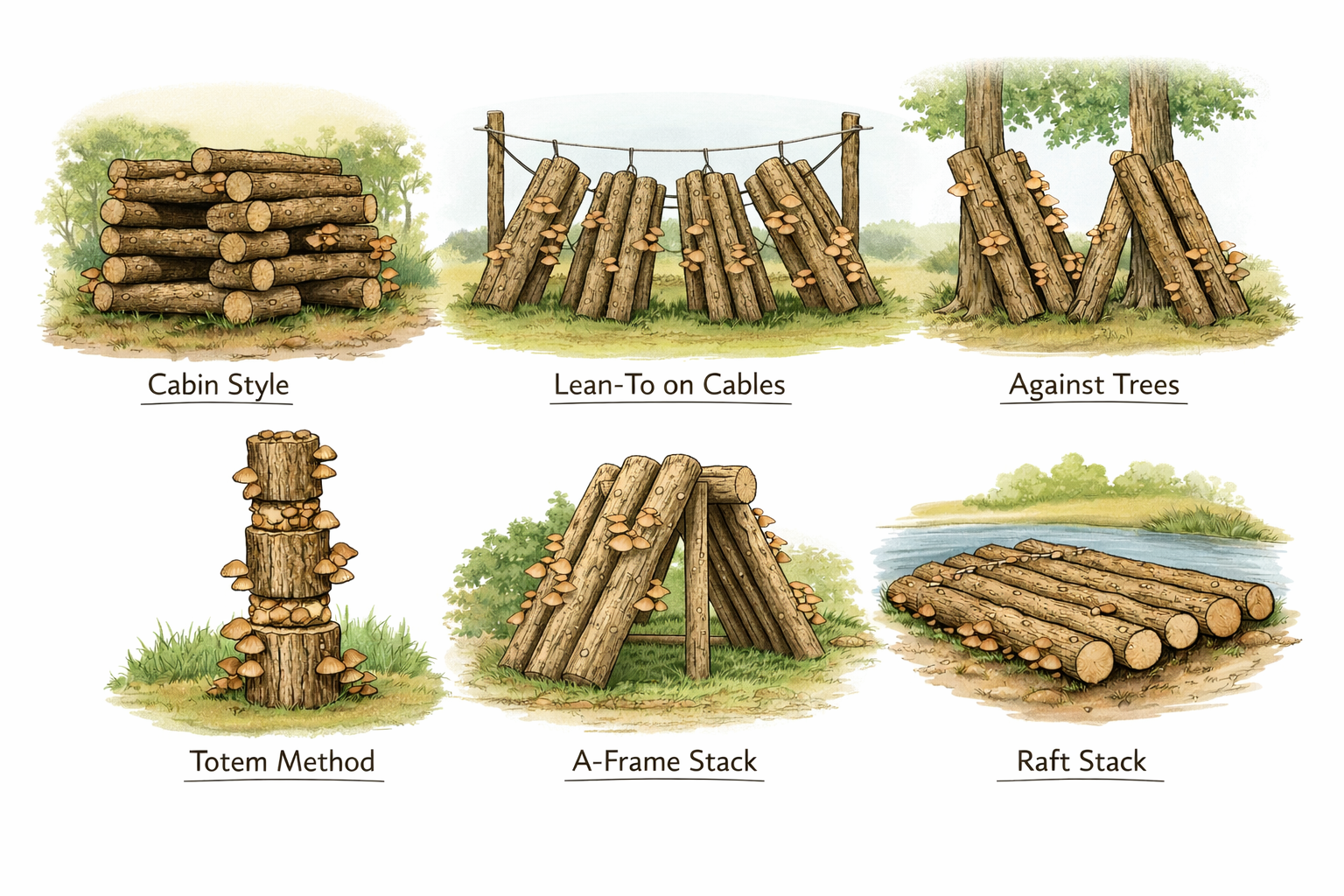
The raft method is exactly what it sounds like: inoculated logs are laid horizontally together, usually close to the ground, creating a low bed or “raft” of wood.
This arrangement helps the logs hold moisture and creates the kind of cool, humid environment Chestnut mushrooms naturally prefer. A shaded area beneath trees or along the edge of a woodland works beautifully.
The goal is not to keep the logs soaking wet. You simply want to protect them from drying out for long periods.
How to Grow Chestnut Mushrooms on Logs Using the Raft Method
1. Start With Fresh Hardwood Logs
 Use healthy, freshly cut hardwood rather than old logs that are already decomposing. Older wood may already be occupied by other fungi, which means your Chestnut mycelium has more competition.
2. Inoculate the Logs
Drill holes along the logs and fill them with Chestnut mushroom spawn. Sawdust spawn works very well for this method, although plug spawn can also be used.
Once the spawn has been inserted, seal the holes with wax. This helps protect the inoculation points from drying out while the mycelium begins growing into the wood.
3. Build the Raft
Lay the inoculated logs horizontally in a shady location. Arrange them close together so they help maintain moisture around one another.
A naturally damp woodland edge, shaded garden area or other protected spot is ideal. Think of the forest floor: shaded, cool and humid, but not sitting in standing water.
4. Keep the Logs From Drying Out
Once the raft is established, moisture becomes the main thing to watch. During long dry periods, water the logs enough to keep them from becoming completely dry.
The shaded location will do much of the work for you, especially if the raft is surrounded by leaf litter or other organic material that helps hold moisture.
5. Be Patient
This is the hardest part for most mushroom growers. Chestnut mushrooms grown on logs are not an instant crop.
The mycelium needs time to spread throughout the wood before it has enough energy to produce mushrooms. Depending on the logs, climate and growing conditions, the first fruiting may take many months or even around a year.
The good news is that once the work is done, the logs are quietly colonizing while you go about your life.
Then one cool, wet day, you may walk outside and find mushrooms.
Ready To Grow Chestnut Mushrooms?
 |
 |
What Do Chestnut Mushrooms Look Like When They Fruit?
Chestnuts usually appear in clusters. Young mushrooms have small golden-brown caps covered in pale scales, and the clusters become more dramatic as the mushrooms mature.
They are one of the prettier cultivated mushrooms, which makes finding that first cluster on a log especially satisfying.
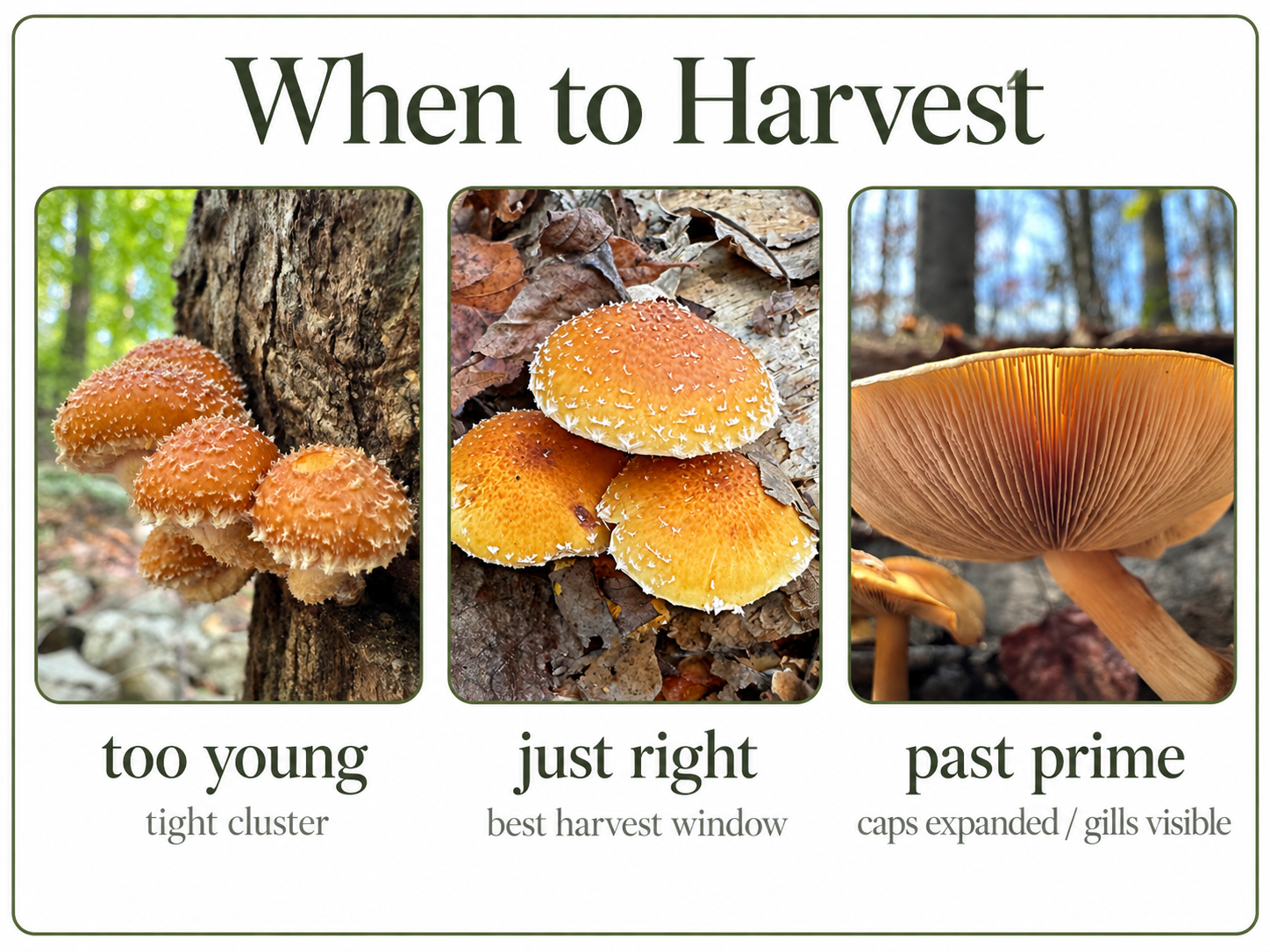
When Should You Harvest Them?
Harvest Chestnut mushrooms while the caps are still firm and attractive, before they become overly mature. The entire cluster can usually be cut cleanly from the log near the base.
And then comes the best part: dinner.
What Do Chestnut Mushrooms Taste Like?
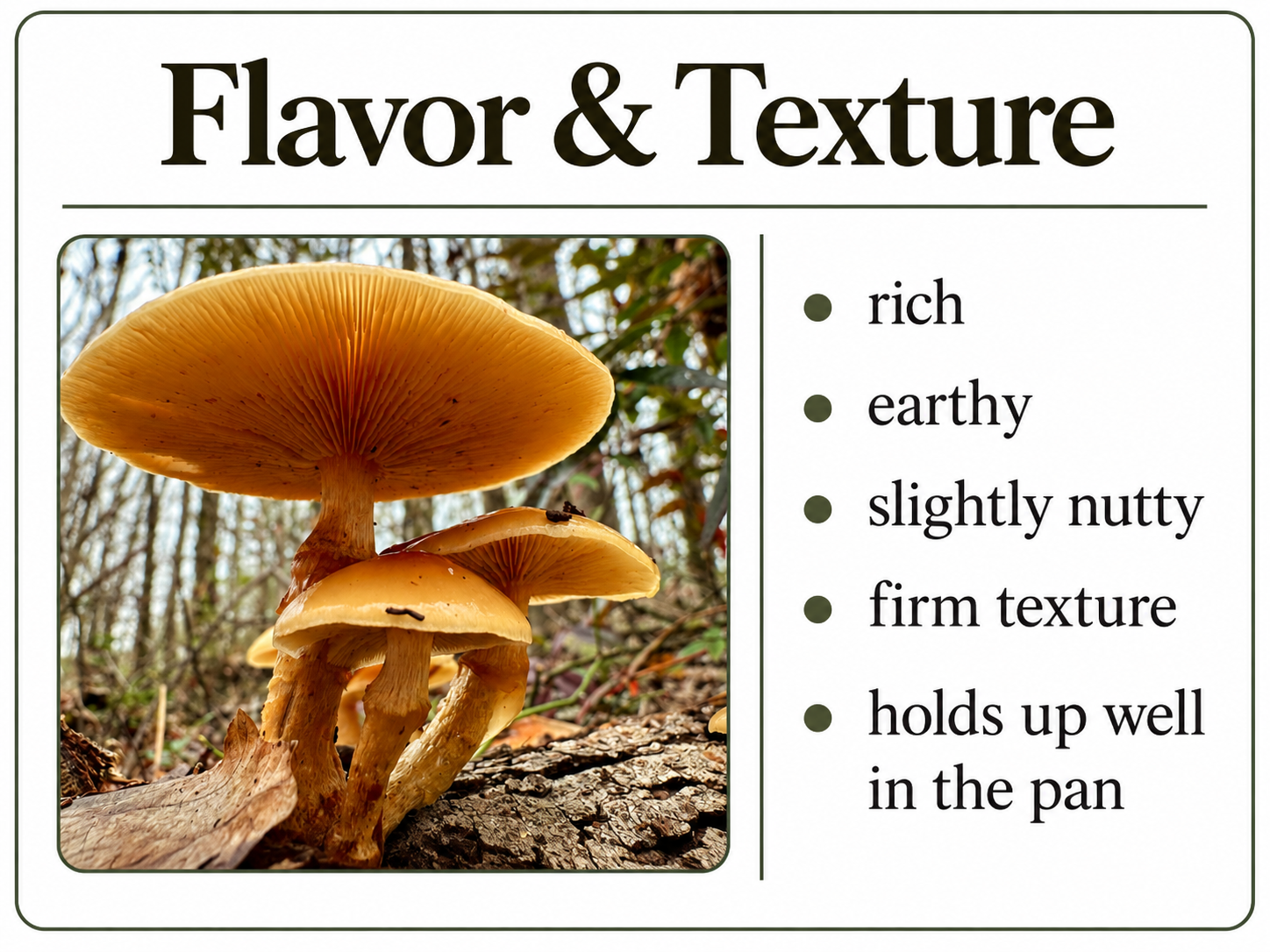
Chestnut mushrooms have a rich, earthy flavor with a slight nuttiness. Their firm texture is especially nice because they hold up well in the pan instead of collapsing immediately.
For your first harvest, keep it simple. Sauté them in butter or olive oil with a little salt and maybe garlic or herbs. It is always worth tasting a new mushroom on its own before burying it under a complicated recipe.
Will the Logs Produce Again?
Yes, and this is one of the best reasons to grow mushrooms on logs.
Once the Chestnut mycelium has colonized the wood, the logs may continue producing mushrooms over multiple fruiting cycles. Eventually the fungus will break the wood down completely, which is exactly what it is designed to do.
By the end of the process, you have harvested mushrooms, the fungus has consumed the wood, and the remaining material is slowly returning to the soil.
Is This a Good Method for Beginners?
Absolutely.
You do not need a sterile laboratory or a complicated fruiting chamber. You need fresh hardwood logs, mushroom spawn, a drill, wax, shade, moisture and some patience.
That is one of the things I love most about outdoor mushroom cultivation. You are not trying to control every part of the process. You are creating the right conditions and allowing the fungus to take it from there.
A little work in the beginning can turn a shady corner of your yard into a mushroom-producing area for years.
And once those first Chestnut mushrooms appear, there is a very good chance you will start looking around your property wondering where else you could fit another raft. 🍄
Ready To Grow Chestnut Mushrooms?
| |
|